Richelieu Rock Reef Basics:

Richelieu Rock , Mu Koh Surin Great for: Large animals, small animals, underwater photography, dive value-for-money and advanced divers
Not so Great for:
Wrecks, beginner divers, snorkelling, non-diving activities
Depth:
5 - 35m
Visibility:
15 - 35m
Currents:
Can be strong
Surface Conditions:
Can be rough
Water Temperature:
26 - 29°C
Experience Level:
Intermediate - advanced
Number of dive sites:
2
Diving Season:
November to April
Distance:
~200 km north of Phuket (10 hours), 80 km northwest of Khao Lak (4 hours, or 2 hours by speed boat)
Access:
Thailand liveaboards and Khao Lak diving day trips

Recommended length of stay:
2 days

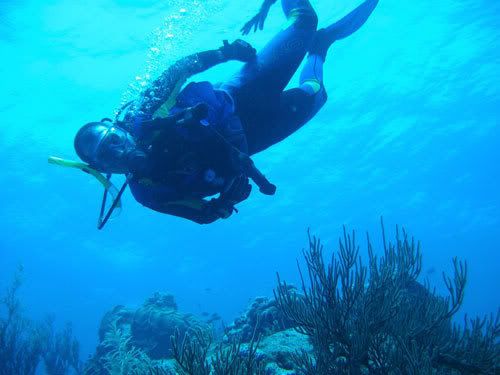
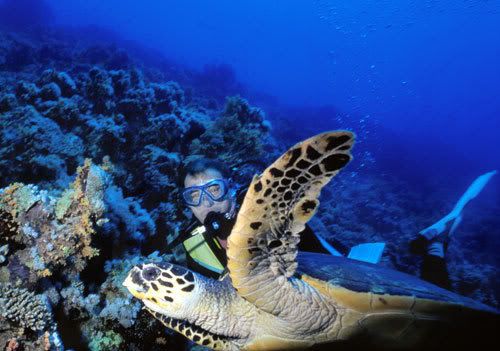
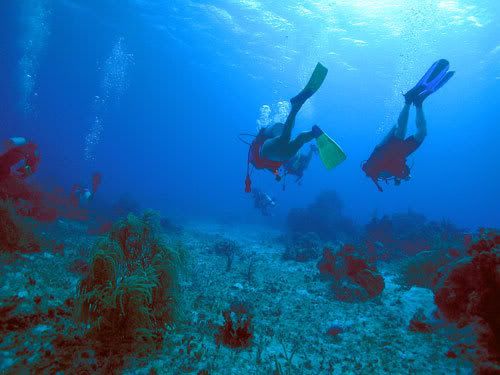
Richelieu Rock This horseshoe shaped rock located near the Surin Islands in the Andaman Sea, is considered by many to be the best dive site in Thailand. Discovered by diving pioneer Jacques-Yves Cousteau with the aide of local fishermen, it now attracts divers from all over the world due to the sheer variety of marine life that can be seen here.
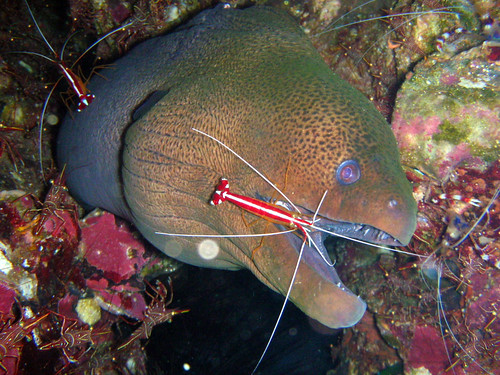
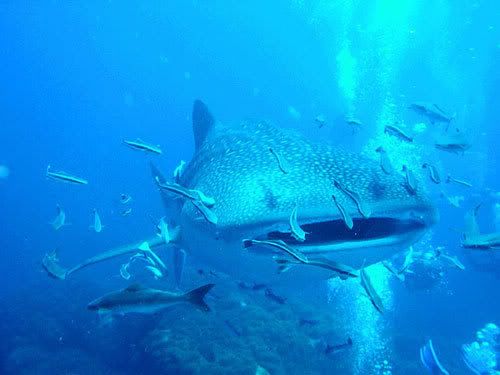
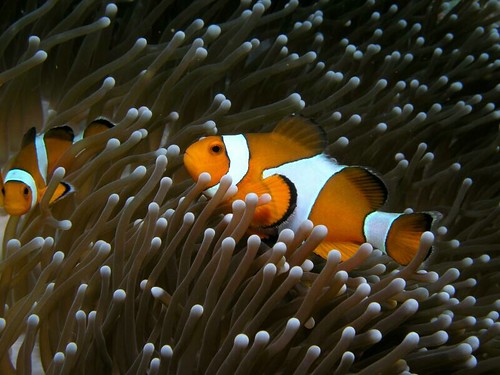
Richelieu Rock , Mu Koh Surin Richelieu Rock , Mu Koh Surin Richelieu Rock , Mu Koh Surin Richelieu Rock rates as one of the best places in the world to dive with whale sharks and is easily the best site in Thailand diving for this amazing activity. It's not the only Thailand dive destination where whale sharks are seen but Richelieu Rock certainly attracts more than its fair share. Schooling Chevron Barracuda, numerous types of Moray Eels, abundant LionFish and Scorpion Fish. 5 types of Anemone Fish, Juvenile Emperor Angel Fish, Sea Horses, Ornate Ghost PipeFish and Harlequin Shrimps can all be found. This site is also a prime location for sighting Whalesharks, occasional Manta Rays and ShovelNose Rays.
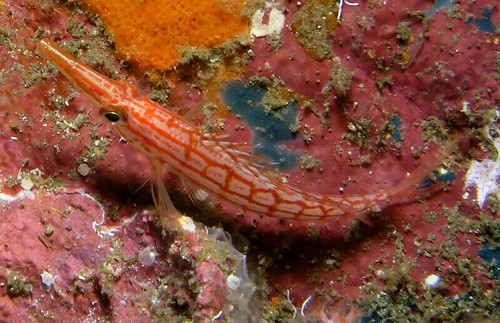
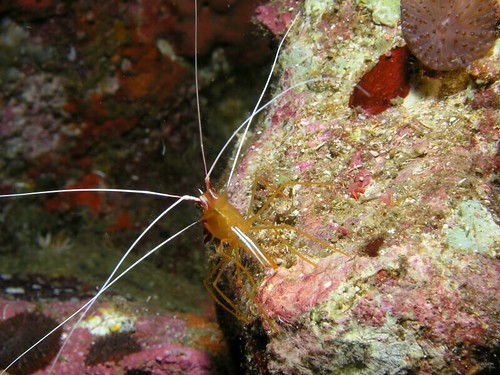
Oxycirrhites typus - Longnose Hawkfish (Richelieu Rock)Lysmata Amboinensis - White-banded cleaner shrimp (Richelieu Rock) Swimming with such a large animal, known to grow to fourteen metres in length, is a never to be forgotten experience for any diver. Sightings occur about 10% of the time. Some dive seasons see more visitors than others and generally February to April is the best time for a visit if your aim is to enjoy the exhilaration of swimming with these massive creatures onboard liveaboards in Thailand.

source Reference : divetheworldthailand.com
source Photo :

le congre's photos

takau99's photos

Family name: Myliobatidae, subfamily Mobulinae
Order name: Batoides
Common name: Mantaray
Scientific name: Manta Birostris (
Dondorff, 1798)

The Spanish word for blanket is 'manta' and aptly describes the unique spherical body shape of this animal. Also known as "devil ray" with graceful pectoral 'wings', manta rays are easily recognised by their paddle-like cephalic lobes projecting forward from the front of the head (actually extensions of the pectoral fins, supported by radial cartilages), and a very broad, rectangular terminal mouth.

The manta ray, or giant manta (Manta birostris), is the largest of the rays, with the largest known specimen having been nearly 7.6 meters (25 ft) across its pectoral fins (or "wings") and weighed in at 3,000 kg (6,600 lb). Mantas vary in colour from black, grey-blue, to red-brown on the upper surface of their cartilage body, sometimes with white shoulder patches and blotches, and almost pure white on the lower surface of their pectoral fins and body disc. Their body patterns show individual variation and helps identify individuals. There are also regional differences in manta ray colour patterns. For example, specimens from the eastern Pacific often feature dusky to mostly black undersurfaces, while those from the western Pacific are typically snow white underneath.

Although it's difficult not to recognise an adult manta ray, juveniles are similar to mobula rays (of which there are nine species) that grow to three metres and share paddle-shaped cephalic lobes and gracefully curved pectoral wings. Mantas are now thought to be a single species, and mobulas are most readily distinguished by the position of the mouth - mantas have terminal mouths (located at the front of the head), whilst mobulas have sub-terminal mouths (located underneath the head, similar to many sharks).

Even though manta rays have up to 300 rows of small peg shaped teeth (the size of pin heads) only on the lower jaw, they really are gigantic filter-feeders, preying on planktonic crustaceans and small schooling bony fishes. The two fleshy lobes of cephalic fins are unrolled and held at a downward angle to create a funnel guiding prey into their enormous mouth. Feeding often occurs near or at the surface where plankton accumulates.

The mantaray are ovoviviparous with a usual litter size of two - each pup wrapped in a thin-shell that hatches inside the mother, later to be born alive. Birth occurs in relatively shallow water, where the young remain for several years before expanding their range further offshore. Like sharks and other rays, mantas are fertilized internally. Male manta rays have a pair of penis-like organs called claspers, along the inner part of their pelvic fins. During courtship, male chase the female, eventually one grasping the tip of one of her pectoral wings between his teeth, and pressing his belly against hers. Then, the male flexes one of his claspers and inserts it into her vent. Copulation lasts about 90 seconds. The fertilized eggs develop inside a mother manta's body for an unknown length of time that may exceed 12 months.


A newborn manta ray is about 125cm wide and growth is rapid, doubling in size during the first year of life. Males mature when they reach a size of about four metres, females at about five metres; it is unknown what age this is. Likewise, it is not known how long mantarays live, but best guesses are about 25 years.
Only large warm water sharks, such as the tiger shark are known to prey naturally upon manta rays.

Manta ray distribution is circum-tropical, around the globe, generally between 35 degrees north and south latitude, including South Africa, Madagascar, Mozambique to Somalia; in the Gulf of Aden, Red Sea, Arabian Sea, the Bay of Bengal, Burma (Myanmar), Thailand, Malaysia, Indonesia, Philippines, Cambodia to southern Japan; northern Australia, Micronesia, New Caledonia, Fiji, New Guinea, Solomon Islands, Hawaii; southern California to northern Peru, North Carolina to southern Brazil, the Azores, and Senegal to Liberia.


source Reference: www.dive-the-world.com & wikipedia.org

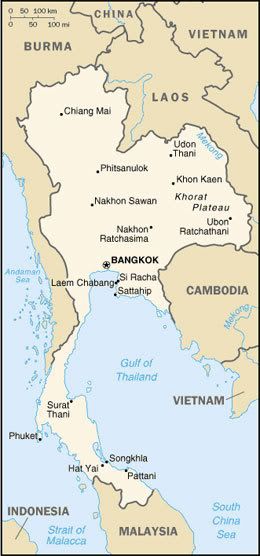
The weather on either side of the Kra Isthmus and diving conditions in the Andaman Sea and the Gulf of Thailand are dominated by two opposing monsoons, the northeast and southwest monsoons. The northeast monsoon sweeps across the Gulf of Thailand between mid October and mid December, bringing heavy rain and strong winds - some dive sites become inaccessible during this time as they suffer from strong currents and reduced visibility. It is during this period that many tourists switch, as if by magic, to the west coast.

Those that stay on in the Gulf during this short time will find themselves on nearly empty beaches, with the sun regularly appearing from behind the clouds. An anomaly is that the easternmost diving regions in Trat province remain sheltered during this period.

The Andaman Sea is sheltered from the worst effects of the northeast monsoon, and diving and snorkelling is at its best from November to April. Underwater visibility ranges from 5m. to 30m. or more during this period. From May to October the southwest monsoon strikes this region, bringing in its wake towering seas and strong currents and increased turbidity.

Diving seasons, ThailandDiving seasons, ThailandDiving seasons, ThailandDiving seasons, ThailandConversely, the dive sites in the Gulf of Thailand are at their best during this season, with only minimal winds and seas. Visibility can sometimes equal that of the Andaman Sea during this period. There are always dive sites on either side of the Isthmus that are sheltered enough to be dived whatever the weather so, if you find in the wrong place at the wrong time, don't despair!
Water temperatures in Thailand rang from 27°C to 31°C. A thin wetsuit or lycra suit is recommended, not simply for protection form exposure but also as a barrier to marine hazards such as stinging cells. Oceanic sites (such as the Similans or the Burma Banks) are subject to sudden cold currents or thermoclines which can chill the water by up to 10°C and, although these temperature dips are localized, most divers still prefer to don 3-4 mm. wetsuits for thermal protection.

source Reference : Pocket Guide DIVE Thailand

eXTReMe Tracker