The Thai New Year (Thai: สงกรานต์ Songkran) is celebrated every year on 13 April to 15 April. It is also celebrated in Laos (called pi mai lao or 'Lao New Year' in Lao), Cambodia, Myanmar (where it is called Thingyan), and by the Dai people in Yunnan, China. Sri Lanka also celebrates a similar festival called Sinhalese and Tamil New Year on the same dates. The same date is celebrated widely throughout the Indian subcontinent, albeit based on the astrological event of the sun beginning its northward journey.
The date of the festival was originally set by astrological calculation, but it is now fixed. If these days fall on a weekend, the missed days off are taken on the weekdays immediately following. Songkran falls in the hottest time of the year in Thailand, at the end of the dry season. Until 1888 the Thai New Year was the beginning of the year in Thailand; thereafter 1 April was used until 1940. 1 January is now the beginning of the year. The traditional Thai New Year has been a national holiday since then.

While the water splashing will flourish, the traditional values of Songkran are the focus of the 2008 celebrations.
Songkran is without doubt the most popular of all Thai festivals and rightly so.
It marks the beginning of a new astrological year and its exact dates are determined by the old lunar calendar of Siam. This year the three-day festival falls on 13 to 15 April.
Traditionally, April 13 is known as “Maha Songkran Day” and marks the end of the old year, April 14 is “Wan Nao”, while April 15 is “Wan Thaloeng Sok” when the New Year begins.
While the festival has its roots in Buddhist heritage, the washing of Buddha images, merit making, traditional family values and the sprinkling of water in respect for elders, it is best known for the fun and “sanuk” everyone gains from splashing copious quantities of water on all who happen to pass by.
Songkran is celebrated with gusto by young and old, throughout the country. City communities and villages in rural Thailand forget their troubles and concentrate on the serious of business of having fun as well as cooling off, during the height of the summer’s scorching tropical temperatures.
Probably of all the national festivals, this is the one that foreigners love to experience the most. They will come across water splashing festivities wherever they travel giving them an opportunity to share in a festival that is immensely popular, while still retaining a link to its traditional roots and values.
One of the traditional values points to the Thai family and the opportunity for family members to express their respect for their elders. Younger members of the family pour scented water on the hands of their parents, and grandparents. They may present them with gifts or tokens of their love. In return, elders wish youngsters good luck and prosperity.
In temples, elder members of the family gather to make merit, offering alms to the monks. They may help clean the temple courtyard, or perform bathing rites for Buddha images
In by-gone days, the fun of splashing water on friends or strangers had to wait until the late afternoon when the religious duties and ceremonies were over.
Today, the lines are often blurred with the younger generation making the most of the three-day opportunity to splash water on everyone in sight.
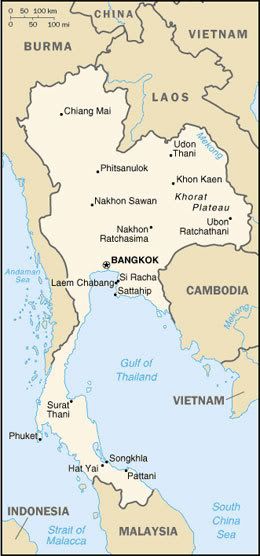
Possibly the most famous of the Songkran celebrations takes place in Chiang Mai. It attracts thousands of visitors, from all over Thailand as well as international tourists determined to share in the fun.
Often simply called the Chiang Mai Water Festival, the core of the celebrations will be held, 13 to 15 April, at the city’s main irrigation canal, with parades and cultural performances as well as arts demonstrations. The actual opening ceremony will be held 12 April, at the Royal Flora complex when the Minister of Tourism and Sports will declare the festival open.
Reference : www.tourismthailand.org